
Robot Gripper Finger Replacement:A Complete Engineering Guide
A practical engineering guide covering wear analysis, material selection, compatibility and lifecycle optimization for industrial automation components.
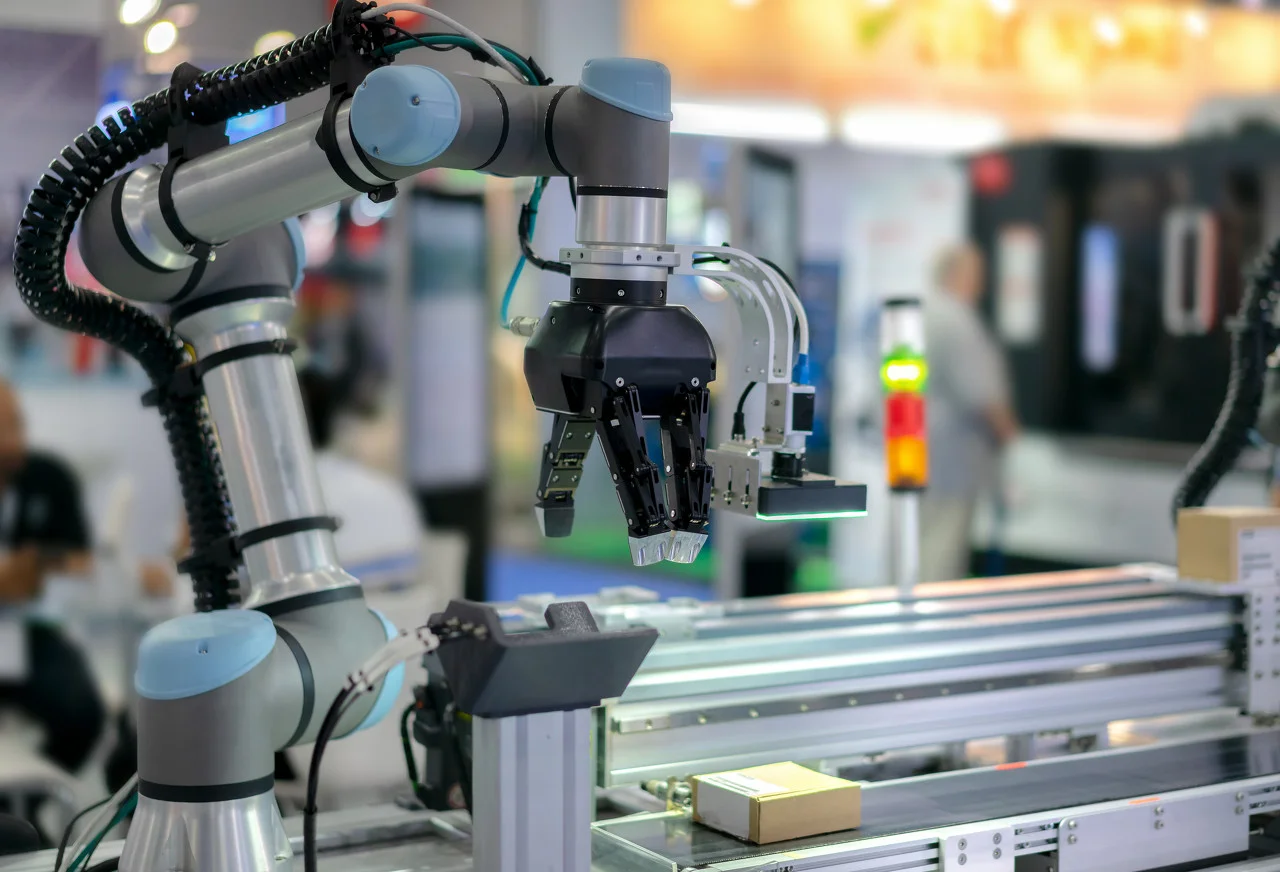
Robot gripper fingers (also called gripper jaws or end effector jaws) are replaceable wear components in automated manufacturing. When wear affects gripping accuracy, manufacturers can replace OEM fingers or use custom CNC-machined alternatives optimized for their specific application — often at lower cost, shorter lead time, and with wear performance suited to their specific application.
What Are Robot Gripper Fingers?
Robot gripper fingers — also called gripper jaws or end effector jaws — are the mechanical components that make direct contact with workpieces in automated handling systems. They are the last link in the robotic kinematic chain, responsible for gripping, holding, positioning, and releasing parts during manufacturing operations.
Engineering Function
In any robotic material handling application, gripper fingers serve a critical role:
- Workpiece retention — Provide sufficient clamping force to securely hold parts during high-speed movement
- Position accuracy — Maintain consistent part location for downstream processes like CNC loading, welding, or assembly
- Force distribution — Spread gripping force across the contact surface to avoid workpiece deformation or damage
- Cycle reliability — Perform millions of gripping cycles without dimensional drift or surface degradation
Gripper fingers are consumable wear components in automated production environments. Replacing worn fingers is usually more cost-effective than replacing a complete gripper module or risking production downtime.
Why They're Critical to Production Uptime
| Factor | Impact |
|---|---|
| Cycle count | A single gripper can perform hundreds of thousands to millions of cycles per year |
| Wear rate | Contact surfaces wear faster with heavy parts, high speeds, and abrasive materials |
| Failure mode | Gradual — dimensional wear, not sudden breakage |
| Detection | Slippage, misalignment, or part damage during handling |
Engineering note: A worn gripper finger typically degrades gradually: first you notice occasional part slippage, then positioning drift, and finally inconsistent cycle times. By the time operators see visible wear, production quality has already been affected. Proactive replacement scheduling is the most cost-effective strategy.
Why Robot Gripper Fingers Need Replacement
Gripper fingers wear out for specific, predictable reasons. Understanding the root cause determines the right replacement strategy.
Cause: Contact surface wear reduces friction coefficient and clamping force transfer.
Solution: Replace with textured surfaces or hardened coated contacts.
Cause: Abrasive contact gradually removes material, changing jaw positioning.
Solution: Replace before dimensional wear affects gripping accuracy.
Cause: Mismatched contact profile creates point-contact stress on delicate parts.
Solution: Custom-profile fingers machined to match your specific workpiece contour.
Cause: Cutting fluids, oils, and debris accumulate on gripper surfaces.
Solution: Teflon-impregnated anodized aluminum or non-stick surface treatments.
Cause: Repeated expansion/contraction accelerates material fatigue.
Solution: Tool steel or specialized alloys rated for thermal environments.
When to Replace — Decision Guide
| Symptom | Most Likely Cause | Action |
|---|---|---|
| Part slips during rapid traverse | Contact surface wear | Replace or add grip texture |
| Inconsistent pick position | Dimensional wear > 0.3 mm | Replace finger set |
| Visible flat spot on contact face | Abrasive wear from high-cycle operation | Replace; consider harder material |
| Part surface marks or scratches | Contamination or wrong contact profile | Clean and evaluate; replace if worn |
| Finger hot after welding cycle | Thermal exposure | Replace with heat-resistant material |
| Gripper cannot close to programmed position | Significant dimensional loss | Replace immediately |
Common Robot Gripper Applications
Automotive Manufacturing
Engine block handling, transmission assembly, door panel positioning, and welding line part transfer. Demands high wear resistance and cycle reliability exceeding 1 million cycles.
Requirements: High clamping force, fluid resistance, 10–50 kg payload, quick-change tooling compatibility.
CNC Machine Loading
Machine tending robots load/unload raw material and finished parts in cutting fluid environments. Demands micron-level positioning repeatability.
Requirements: Oil-resistant materials, non-marring surfaces, thin-profile designs.
Sheet Metal Handling
Gripping flat or formed metal sheets 0.5–10 mm thick. Must maintain grip without damaging the sheet surface.
Requirements: Wide contact area, adjustable grip, non-marring materials.
Assembly Automation
Precise part placement with delicate or finished components. Must provide secure handling without cosmetic damage.
Requirements: Soft/compliant grip surfaces, precisely machined contours, clean-room compatible materials.
Material Selection Guide
The choice of gripper finger material directly affects wear life, workpiece quality, and replacement frequency.
| Material | Applications | Hardness | Wear Resistance | Cost |
|---|---|---|---|---|
| Aluminum (6061-T6) | High-speed handling, light-medium parts | Low | Fair | $ |
| Aluminum (7075-T6) | High-speed, higher strength required | Med | Good | $$ |
| Steel (1045/C45) | Heavy-duty, general purpose | Med | Good | $ |
| Hardened Steel (4140/4340, HRC 40-55) | High-wear, abrasive parts | High | Excellent | $$ |
| Tool Steel (D2, A2, S7) | Extreme wear, thermal exposure | High | Excellent | $$$ |
| Stainless Steel (304/316) | Food, medical, corrosive environments | Med | Good | $$$ |
| Delrin/Acetal | Non-marring, light-duty, low friction | Low | Fair | $ |
| Nylon (PA6/PA66) | Quiet operation, vibration damping | Low | Fair | $ |
| PEEK | High-temp, chemical resistance, medical | Med | Good | $$$$ |
| UHMW-PE | Low friction, non-marring, cost-effective | Low | Fair | $ |
Surface Treatments for Extended Life
| Treatment | Benefits | Best For |
|---|---|---|
| Hard Anodizing (Type II/III) | Wear resistance, corrosion protection | Aluminum fingers |
| Electroless Nickel Plating | Uniform coating, hardness, lubricity | Steel and aluminum |
| TiN Coating | Extreme hardness, low friction | High-cycle steel fingers |
| Teflon Impregnation | Non-stick, contamination resistance | Oily/dirty environments |
| Carburizing/Nitriding | Case hardening of steel | Heavy-load applications |
| EDM/Texture Patterns | Improved grip, no added material | All materials |
OEM Replacement vs Custom Replacement
| Factor | OEM Replacement | Custom CNC Replacement |
|---|---|---|
| Lead Time | 2–8 weeks (often backordered) | 3–10 business days |
| Cost | Premium pricing | Typically 30–50% less |
| Material Choice | Fixed — as designed | Any material optimized for your application |
| Geometry | Standard — one size fits all | Custom-contoured to your workpiece |
| Minimum Order | Usually set quantities | No minimum — single set possible |
| Legacy Support | Discontinued after 5–10 years | Reproduce from sample indefinitely |
| Surface Treatment | Standard finish | Choose any coating or treatment |
Why Choose Custom?
Custom CNC-machined gripper fingers offer several advantages over OEM replacements:
- Material optimization — Upgrade from standard aluminum to hardened steel or wear-resistant polymer
- Geometric improvements — Add locating pins, coolant channels, sensor mounts, or vacuum ports
- Application-specific design — Match the exact contour of your workpiece for optimal grip
- Cost savings — Eliminate OEM markup and minimum order quantities
Compatible Robot Gripper Systems
Custom replacement fingers can be manufactured for most industrial robot gripper systems.
Pneumatic Grippers
Schunk — PGN-plus Series (40, 50, 64, 80, 100), MPG, MPZ, JGP, JGPT
- Schunk PGN-plus Replacement Finger ✓ Available
SMC — MHF, MHL, MHR, MHW, MK series
- SMC MHF Replacement Finger ✓ Available
Festo — DHPS, DHPC parallel grippers, HG series
- Festo DHPS Replacement Finger Guide (Coming soon)
Zimmer — GMP series, GPD, GP500 series
- Zimmer GMP Replacement Finger Guide (Coming soon)
Electric / Collaborative Grippers
OnRobot — RG2, RG6, 2F, 3F adaptive grippers
- OnRobot RG Replacement Finger Guide (Coming soon)
Robotiq — 2F-85, 2F-140, Hand-E adaptive gripper
- Robotiq 2F Replacement Finger Guide (Coming soon)
Zimmer Electric — GE series, GED series with IO-Link
Brand not listed? We can reverse-engineer from samples or drawings for most gripper systems — including legacy and discontinued models.
Why Choose MUXI Precision?
Many shops can CNC machine a gripper finger to print. The difference is understanding what the finger needs to do — not just how to cut it. MUXI Precision's approach combines application engineering with precision manufacturing to deliver replacement components that perform better and last longer.
Application-Based Engineering
We don't just manufacture dimensions — we understand how the finger interacts with the workpiece. Our engineering review considers gripping force, workpiece material, cycle frequency, and operating environment.
Replacement Optimization
We don't simply copy worn parts. Each replacement is evaluated for potential improvements in contact geometry, material grade, and surface treatment.
Industrial MRO Experience
Our background in fiber laser consumables gives us practical experience solving real-world wear and failure problems in industrial environments.
Precision Manufacturing Network
- CNC Precision Machining — 3-axis and 5-axis CNC milling, turning, and grinding. Tolerances to ±0.01 mm.
- Surface Treatment & Coating — Hard anodizing, electroless nickel plating, TiN coating, Teflon impregnation.
- Engineering & Reverse Engineering — CAD modeling from samples or drawings.
- Small Batch & Volume Flexibility — Single set prototyping to production volumes.
Beyond laser consumables: MUXI Precision supports precision replacement components for industrial automation systems — including custom gripper fingers, machine parts, and wear components.
Precision Replacement Process
Step 1: Send Your Sample or Drawing
Provide your existing gripper finger (worn or new) OR a dimensioned drawing.
What we need:
- Existing finger sample or drawing with dimensions
- Robot model and gripper brand/type
- Workpiece material, weight, and geometry description
- Operating environment (dry, oily, hot, abrasive, clean room)
- Annual volume or expected cycle count
Step 2: Engineering Review
Our application engineers evaluate the current design and material, then recommend improvements based on your specific operating conditions.
Step 3: CAD Modeling
Using your sample or drawing, we create a precise 3D CAD model. For sample-based projects, we use dimensional measurement tools to capture geometry to ±0.01 mm accuracy.
Step 4: Precision Manufacturing
Parts are CNC machined from your selected material, then finished with specified surface treatment.
Step 5: Quality Inspection
Each finger is dimensionally verified against the CAD model. Surface finish, hardness, and coating quality are checked before packing.
Step 6: Delivery
Finger sets are shipped ready for installation. No additional modification required.
Need a Custom Gripper Finger?
Need Technical Support or Pricing?
Our engineering team provides remote guidance and setup support for high-power fiber laser systems. Get tailored solutions for your specific cutting requirements.
Need replacement robot gripper fingers for industrial automation?
Muxi Precision provides engineering solutions for high-power fiber laser consumables and industrial replacement parts.
Explore More Technical Resources
- Robot Soft Jaw Guide: Selection and Customization — Coming soon
- The Complete Guide to D30×T5 Laser Protective Windows — Engineering guide for fiber laser protective window selection
- End Effector Maintenance Best Practices — Coming soon